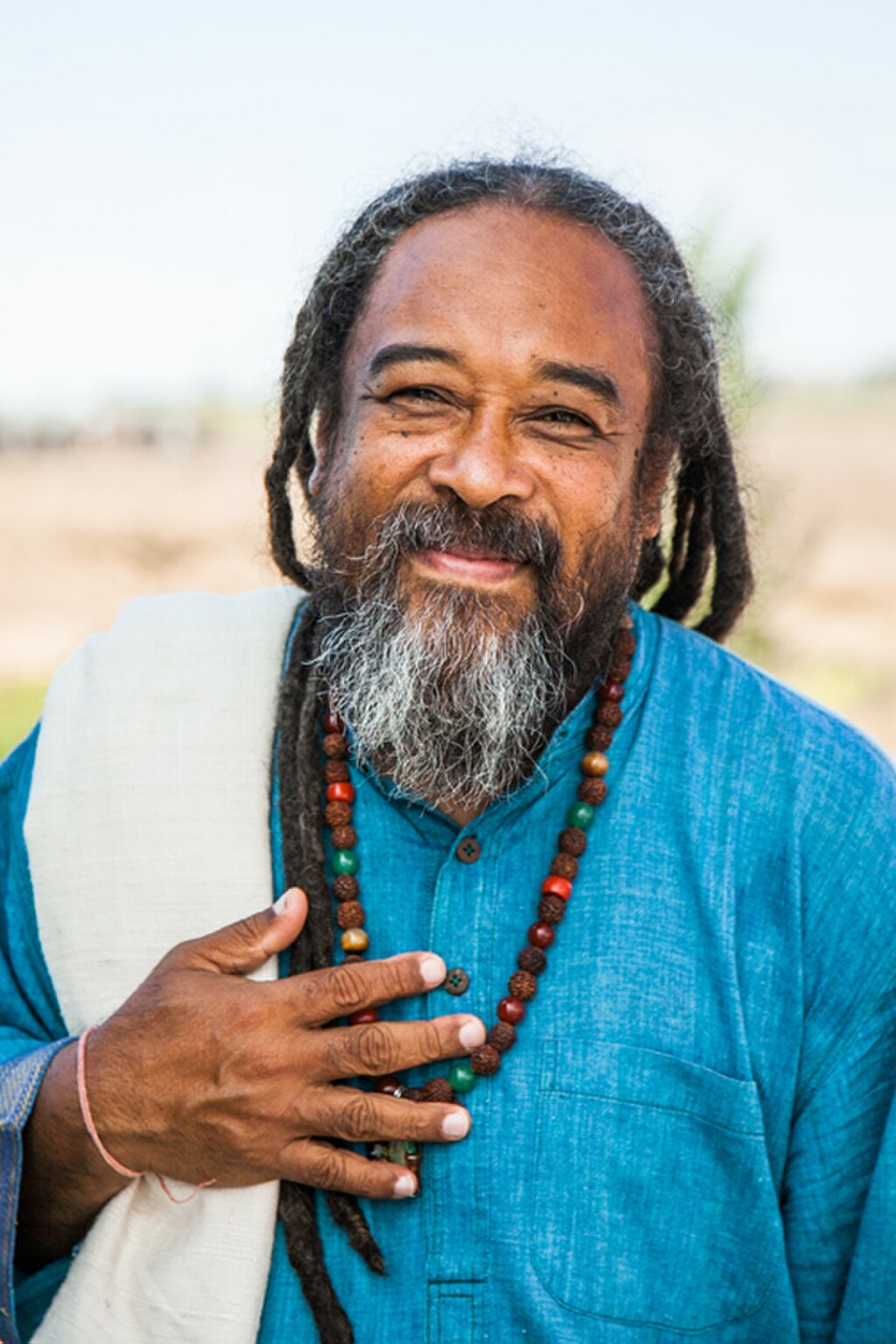
The Art of Simply Being
In the profound simplicity of Mooji's words, "Just be. Don't do anything else for a while," we are invited to step away from the incessant demands of our busy lives and embrace the essence of existence itself. This invitation is not merely a suggestion to pause but a profound call to reconnect with our true nature, which often gets obscured by the noise of doing. In a world that constantly urges us to achieve, produce, and perform, this teaching serves as a gentle reminder of the power of stillness and presence.
To "just be" is to engage with the present moment without the weight of expectation or obligation. It is an invitation to dissolve the boundaries of our conditioned identities and to experience life as it unfolds, free from the constraints of our thoughts and desires. This teaching resonates deeply within the non-dual tradition, where the essence of being is recognized as the foundation of all existence. By allowing ourselves to simply be, we open the door to a deeper understanding of ourselves and our interconnectedness with the universe.
The image / the metaphor
Mooji's directive to "just be" evokes a vivid image of stillness, akin to a tranquil lake reflecting the sky above. The choice of the verb "be" emphasizes existence over action, suggesting a state of being that transcends the need for doing. In this stillness, we can sense the richness of life that often goes unnoticed in our frantic pursuit of goals and achievements. The invitation to refrain from doing anything else for a while encourages us to cultivate a space where we can simply exist, allowing our thoughts and emotions to surface without judgment.
Diving deeper into this metaphor, we can see that "being" is not a passive state but an active engagement with the present moment. It is a call to embrace our true selves, free from the masks we wear in daily life. In this state of being, we can experience the fullness of our existence, recognizing that our worth is not tied to our accomplishments but rather to our inherent nature. This profound stillness can lead to a deeper understanding of our thoughts and emotions, allowing us to witness them without becoming entangled in their narratives.
In the speaker's tradition
Mooji's teaching emerges from the rich soil of non-dual philosophy, which emphasizes the unity of all existence and the illusion of separation. Concepts such as *sunyata* (emptiness) and *fana* (annihilation of the self) resonate with the essence of "just be." In this tradition, the act of being is seen as a return to our original state, where the dualities of self and other dissolve, revealing the interconnectedness of all life. This teaching aligns with the notion of *kenosis*, the self-emptying that allows for a fuller experience of existence beyond the confines of ego.
In the context of non-dual texts, we can draw parallels to the teachings of Advaita Vedanta, particularly the works of sages like Ramana Maharshi, who emphasized self-inquiry as a means to uncover the true self. In his teachings, the question "Who am I?" serves as a gateway to understanding our essence beyond the layers of identity. Mooji's invitation to "just be" echoes this sentiment, encouraging us to turn inward and explore the depths of our being without the distractions of external pursuits.
Living the teaching
Consider a modern scenario where the pressures of work and life converge, leaving one feeling overwhelmed and disconnected. In such moments, Mooji's teaching to "just be" can serve as a powerful antidote. Taking a few moments to step away from the chaos—perhaps by finding a quiet space or engaging in mindful breathing—allows us to reconnect with ourselves. This practice of simply being can help us regain clarity and perspective, enabling us to approach our responsibilities with renewed energy and focus.
In the realm of relationships, this teaching can be particularly transformative. When faced with conflict or misunderstanding, the urge to react can be strong. However, by choosing to "just be," we create a space for reflection and understanding. This pause allows us to listen deeply, not only to the other person but also to our own feelings and reactions. In this way, Mooji's instruction becomes a tool for cultivating compassion and empathy, fostering deeper connections with those around us.
A reflection
As we contemplate Mooji's invitation to "just be," we might ask ourselves: What would it feel like to release the need to do and simply embrace the present moment? This question invites us to explore the layers of our existence, encouraging us to recognize the beauty in stillness and the richness of being. In a world that often prioritizes action over presence, this reflection can lead to profound insights about our true nature and our place within the tapestry of life.



Join the BrightStar Community
Stay connected with daily inspiration, event announcements, and community wisdom